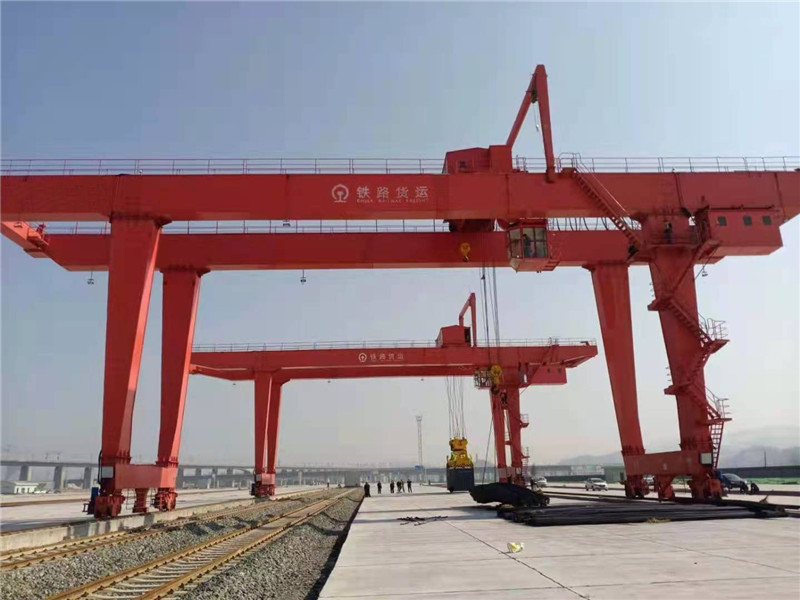
Properly carrying out crane maintenance during the inspection interval is the foundation for ensuring the normal and continuous operation of the crane. Correct maintenance during the overhaul period can extend the inspection and maintenance interval, reduce maintenance workload, and improve equipment productivity.
Crane maintenance during the inspection interval is divided into two levels:
Primary MaintenanceIt refers to routine maintenance undertaken by crane operators. It mainly includes the inspection, lubrication, fastening and adjustment of steel wire ropes, drums, pulleys, bearings, couplings, reducers, brakes and other components.
Secondary MaintenanceIt refers to periodic maintenance undertaken by maintenance personnel, covering the upkeep and servicing of all mechanisms and equipment of the entire crane.
1. Establishment of Equipment Inspection System
To ensure the safe operation of cranes, the top priority is to implement thorough inspection work.
Daily Inspection
Daily inspection is conducted in conjunction with the operator shift handover system. On-duty operators jointly inspect key mechanical and electrical parts of the crane, including the hook, steel wire rope, brakes of each mechanism, controllers, travel limit switches of all mechanisms, and verify the sensitivity and reliability of all safety switches.
Specific inspection items are as follows:Check whether the main power knife switch of the protection box is disconnected. Live-line inspection is strictly prohibited.
Check the steel wire rope for strand breakage or wire breakage; observe whether the rope winding on drums and pulleys is normal, without groove disengagement, knotting or twisting; confirm whether the compression bolts at the steel wire rope end are tightly fastened.
Inspect the hook for cracks; check whether the anti-loosening device of the hook nut is intact, and whether the lifting sling is complete and reliable.
Verify that the travel limit switches of each crane mechanism operate flexibly and normally, and that all safety protection switches function sensitively and properly.
Check the running condition of all crane mechanisms for abnormal noise or malfunction.
2. Establishment of Equipment Responsibility System and Evaluation System
To ensure the effective implementation of daily crane maintenance, all departments shall establish a fixed-operator and fixed-machine post responsibility system.
The advantages of this system are as follows:
It strengthens operators’ sense of responsibility for proper operation and careful maintenance of equipment;
It facilitates the launch of equipment maintenance competitions to improve equipment availability and keep equipment in good working condition;
Fixed-person operation allows operators to fully understand the characteristics and inherent defects of the equipment, so as to maximize its service potential.
In accordance with the principle of user maintenance, cranes operated by one person per shift shall be maintained by the operator; cranes operated by multiple personnel on rotating shifts shall be maintained by each shift operator respectively.
Once the fixed-operator and fixed-machine system is confirmed, random replacement is not allowed. If adjustment is required under special circumstances, the replacement must be approved by management and relevant formalities shall be completed before taking over operation.
Enterprises shall inspect, evaluate and organize maintenance competitions according to the actual condition of cranes. This practice is of great significance for extending equipment service life and ensuring safe production.